Functions are a fundamental concept in mathematics, and understanding their different types is crucial for problem-solving and critical thinking. Linear, quadratic, and exponential functions are among the most common types of functions, and each has its unique characteristics and applications. A flow chart can be a valuable tool for identifying and graphing these functions, making it easier to visualize and analyze their behavior.
A flow chart for linear, quadratic, and exponential functions can help students and professionals alike to quickly identify the type of function they are dealing with and determine the best course of action for graphing and analyzing it. With a printable flow chart, you can have a handy reference guide that you can use whenever you need to work with these functions. Whether you are a student looking to improve your math skills or a professional seeking to streamline your workflow, a flow chart can be a valuable resource.
Learning With Tape Friday Freebies Comparing Linear Quadratic Exponential Functions
Understanding Linear Functions
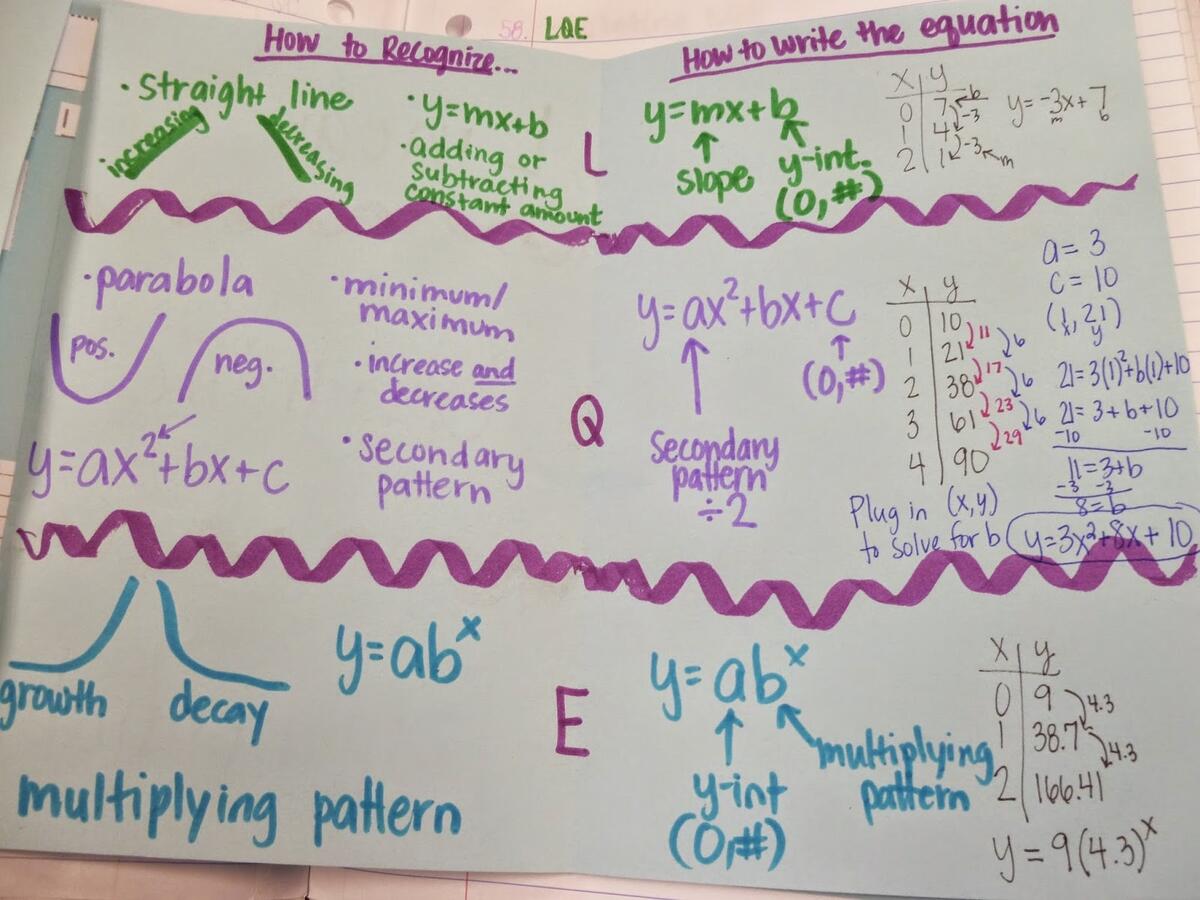
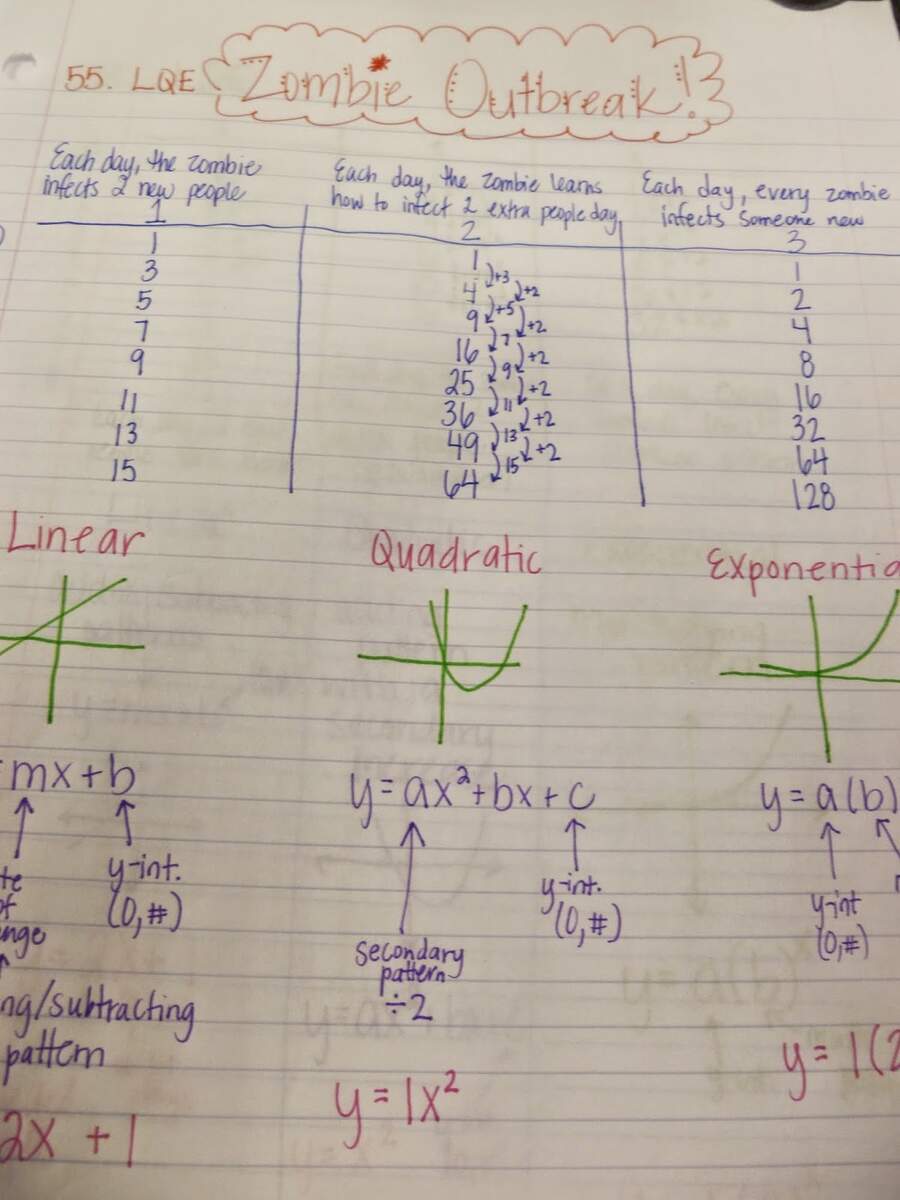
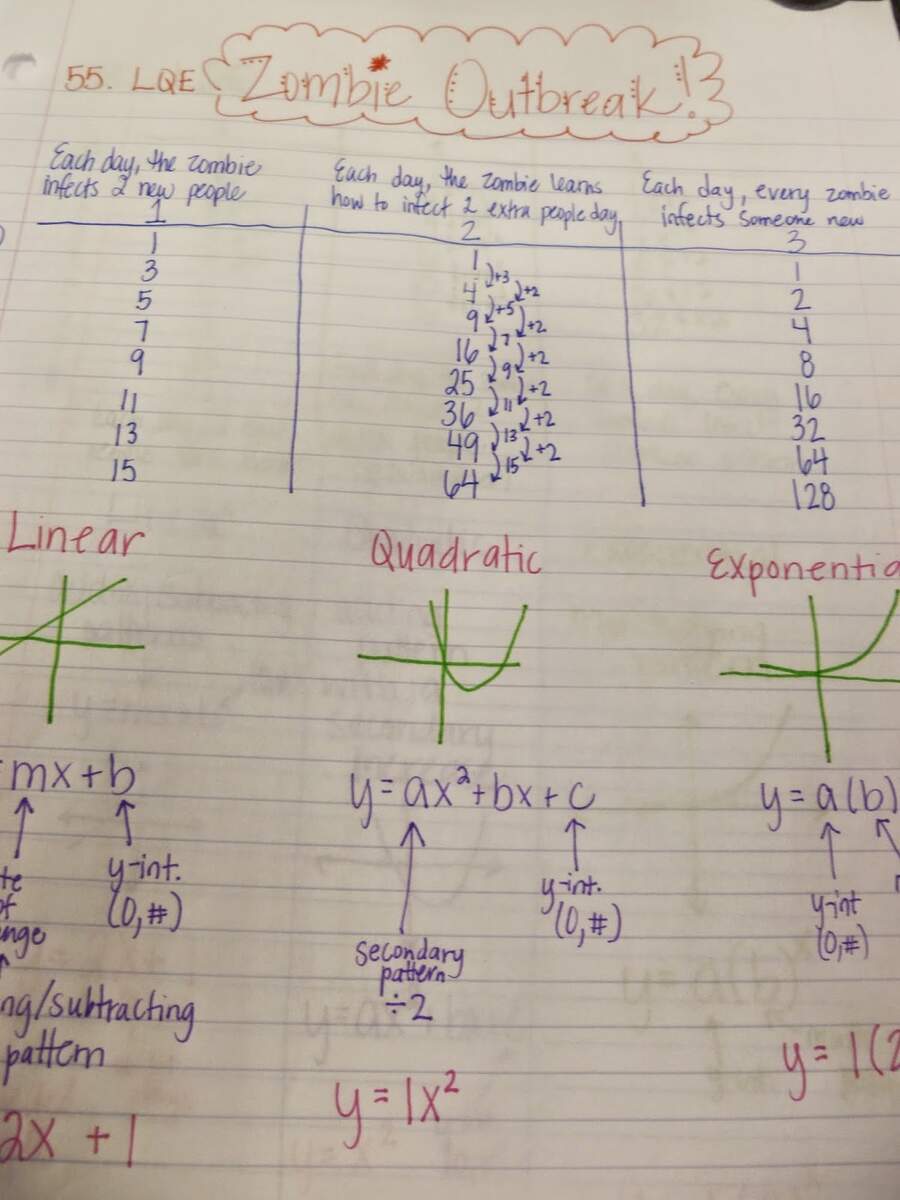
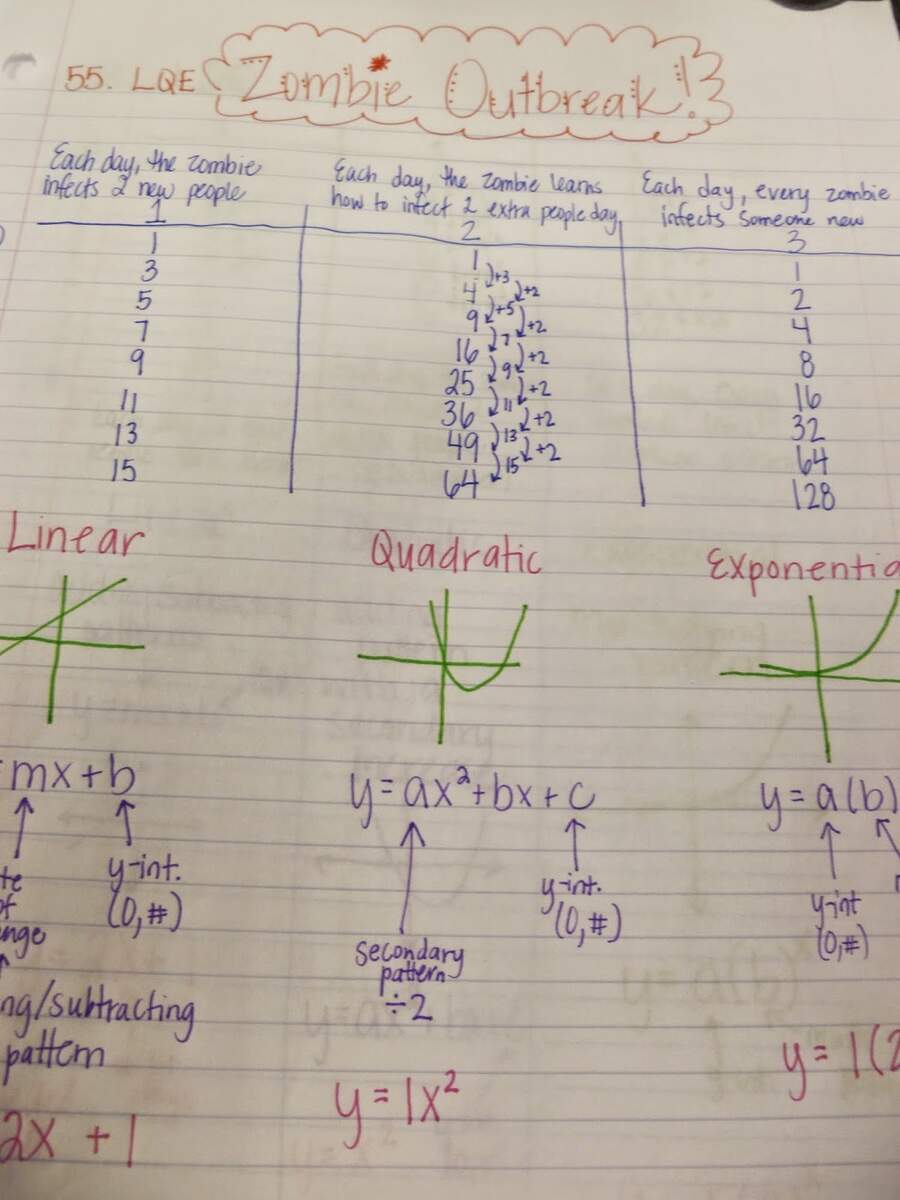
Linear functions are characterized by a constant rate of change and can be represented by a straight line on a graph. They are often represented in the form of f(x) = mx + b, where m is the slope and b is the y-intercept. The flow chart for linear functions typically starts by asking if the function has a constant rate of change, and if so, it proceeds to ask for the slope and y-intercept to determine the equation of the line.
Learning With Tape Friday Freebies Comparing Linear Quadratic Exponential Functions
Exploring Quadratic Functions
Quadratic functions, on the other hand, are characterized by a parabolic shape and can be represented by a U-shaped graph. They are often represented in the form of f(x) = ax^2 + bx + c, where a, b, and c are constants. The flow chart for quadratic functions typically starts by asking if the function has a parabolic shape, and if so, it proceeds to ask for the values of a, b, and c to determine the equation of the parabola.
Delving Into Exponential Functions
Exponential functions are characterized by a rapid increase or decrease and can be represented by a curved line on a graph. They are often represented in the form of f(x) = ab^x, where a and b are constants. The flow chart for exponential functions typically starts by asking if the function has a rapid increase or decrease, and if so, it proceeds to ask for the values of a and b to determine the equation of the curve.
Learning With Tape Friday Freebies Comparing Linear Quadratic Exponential Functions
By using a flow chart for linear, quadratic, and exponential functions, you can quickly and easily identify the type of function you are dealing with and determine the best course of action for graphing and analyzing it. With a printable flow chart, you can have a handy reference guide that you can use whenever you need to work with these functions, making it easier to visualize and analyze their behavior.
Learning With Tape Friday Freebies Comparing Linear Quadratic Exponential Functions
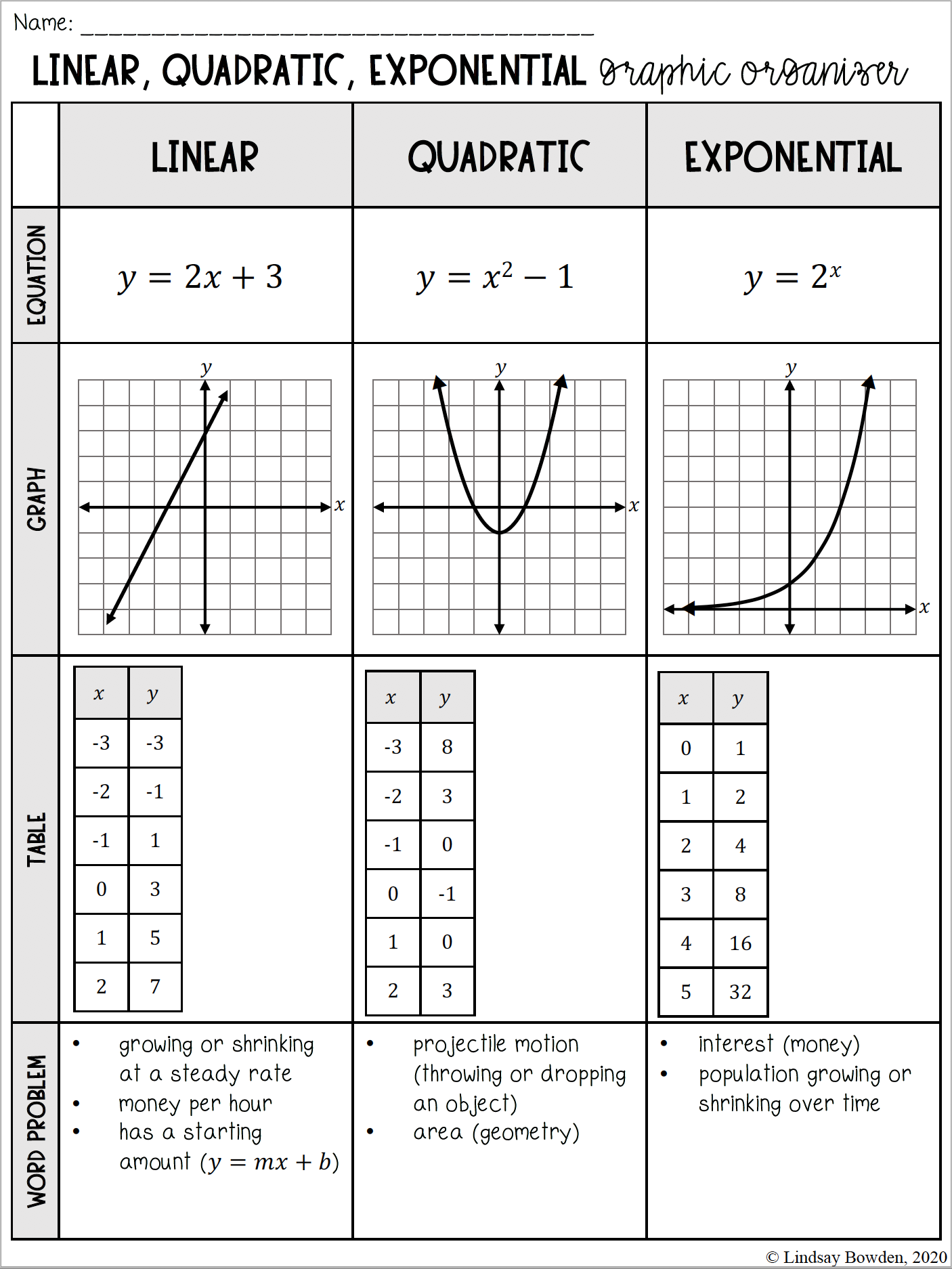
Linear Quadratic Exponential Notes And Worksheets Lindsay Bowden Worksheets Library